Sunday, March 3, 2024
Down Under
I cannot believe it has been almost a year since I posted . . . I guess time flies when you are having fun, and we have been having a lot of fun. And here we are on our biggest adventure yet - New Zealand, Tasmania, and Australia.
We left from Kansas City at 8:30 a.m. for Houston, and after an 8-hour layover there, we boarded the plane for Christchurch, via Auckland. We are grateful the Gaskills suggested that we purchase a Skycouch so we could at least lay down - it really worked well, and after watching the Barbie movie, Don and I decided to try to sleep. Since we left in the dark at 8:00, and we arrived in Auckland at 4:55 a.m., we traveled in the dark the whole way. That made it easier to sleep, but we didn't sleep much . . .
After a 3-hour layover in Auckland, we finally made it to Christchurch. A huge front had stormed in, and the winds rivalled any that we have in Kansas, but we hope tomorrow is better. It is about 70 degrees, and it would have been perfect without the wind.
We went to the Antarctic Center, where we were able to see the smallest penguins, experience an Antarctic storm (though, frankly, it wasn't as cold as the day I drove to Diana's in January during the polar plunge), and we rode in a vehicle that operates in Antarctica. That was pretty interesting - we went up a 45 degree grade - and then down it - crossed a bridge with no center, similar to a cravasse, and went around a hill, almost on the side. We also heard a wonderful talk about Huskies, and I loved that the presenter said the first ones to the South pole were not the men on Amundsen's team but instead the lead dog!
Our driver, Breet, then gave us a short tour of downtown Christchurch and then dropped us at the Wyndham apartments. The first order of business was to purchase a hat for Don, since the sun is very strong here, and a large hole in the ozone layer near Antarctica makes it worse. Then we grabbed a very early dinner, and are headed to bed, as we have a very busy day tomorrow. We have had a terrific beginning to our trip, howevver.
Saturday, March 18, 2023
It is already March? Tax time?
The last six months have flown. After the cruise we had more Ranch time, football, Thanksgiving with Di and Daniel (and their baby shower), Christmas with Kenneth's family, and then suddenly it was 2023, where 6 days in, we greeted Eleanor Ruth Stucky. Phew! I have spent 5 weeks in Parker helping with the baby, and now it is tax time. Our taxes are completed and I decided it is time to clean out files. I have done that before, but I have every tax return we have ever filed along with supporting documents. Don wants me to keep the returns, but I am dispensing with the supporting documents for at least 30 years . . . and I should do more. But I thought it would be interesting to document a few costs from then.
For example, our long distance bills were not free . . . as a matter of fact, calls placed after 7:00 a.m. and before 8:00 p.m. (I think) were much more expensive, and weekend calls until about 6:00 p.m. Sunday were the cheapest. In August of 1977, 6 long distance calls cost $8.54, with some calls costing $.25/pminute. Glad cell phones have changed all of that! Our June electric bill of 510 KWH was $16.35 . . . that seemed like a lot back then, but wouldn't it be great to have those rates now. But the most interesting find was the bill for our avocado full-sized refrigerator freezer. We put $30.00 down on a $514.99 refrigerator - and sales tax was 3%. We bought our house in February of that year, and we paid 14% interest - today's rates still feel like a deal!
I don't have time to document the past few months, so a few pictures will have to do.
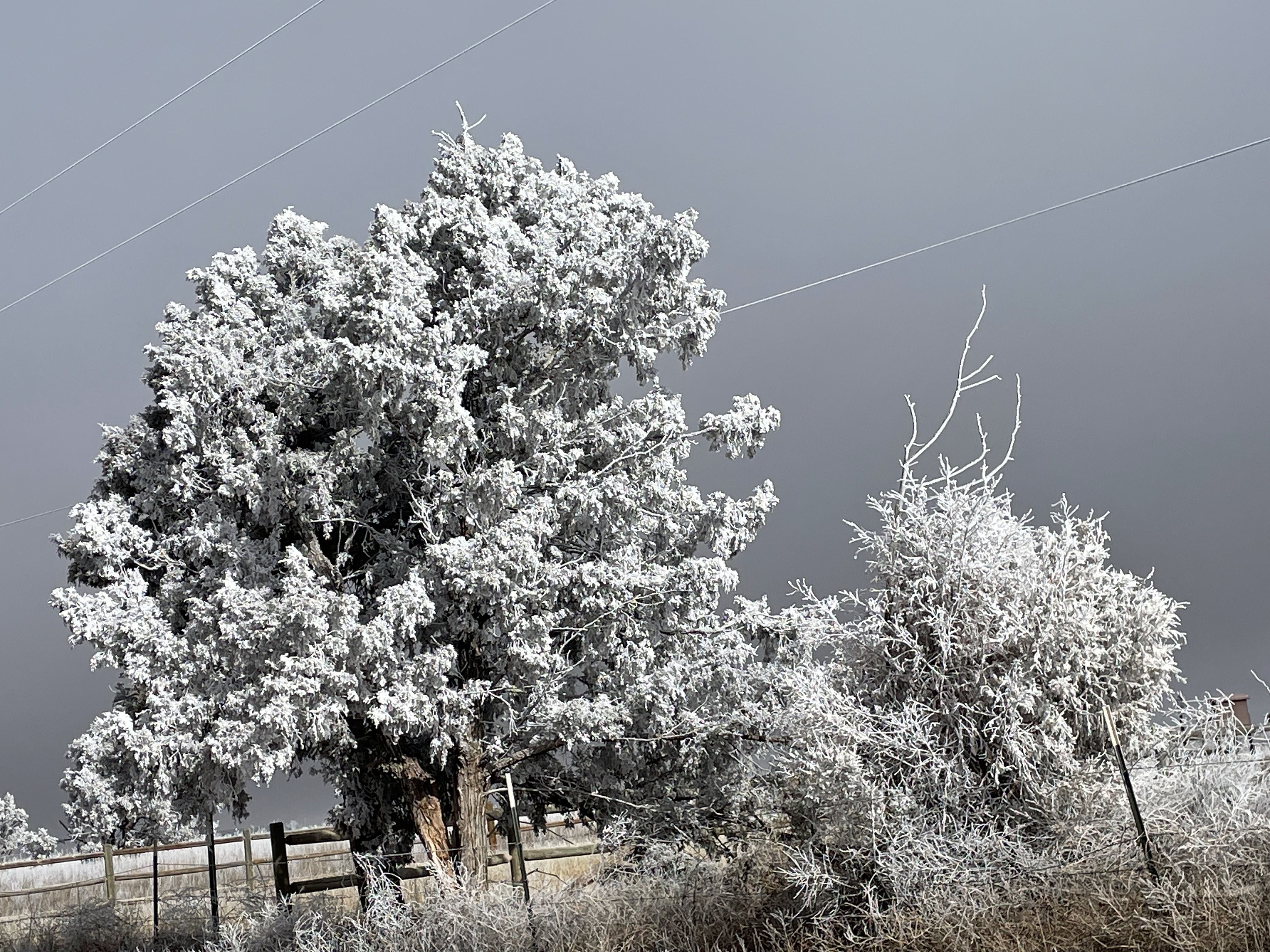
Pictures include Kenneth, Staci, Diana and Brianna at the shower; Daniel, Diana and Kathy Dunlavy at the shower; Baby Eleanor; heavy hoarfrost in Las Vegas; and celebrating the Super Bowl and the basketball 'Cats with the Gaskills. Fun times.
The National Geographic Venture
I have only taken two cruises in my life - one of the Greek Islands in 1970 and one several years ago with Kenneth's Senior Class. I wasn't sure what kind of ship we would be on this time, but I knew it would be different from the ones on which I had previously sailed.
First, the ship was small. It only holds 100 passengers, but for our cruise we only had 74.
Second, since the primary mission of the cruise is education, there was no casino (to our relief), no excessive drinking, no partying . . . just a nice group of people who are interested in wildlife, nature, and learning.
Third, since we were on an expedition, we did not have to dress up. We were not there to impress, and most of us wore jeans and casual shirts.
Fourth, rather than entertainment, we always had a talk after dinner. We learned about the rainforest, whales, the Kermode bears, the First Nations . . . and more. Fascinating information!
We had booked a medium-priced room which was not so different from staying in the RV. The bathroom was bigger than the RV, and we found the entire set-up quite accommodating. One interesting aspect was that the doors could not be locked from the outside. I was a little uncertain about it, but it made sense once we were there. Surely made it easy not having to keep track of an key.
Having a nice balcony helped, too. We didn't spend a lot of time out there, but just being able to open the door made the room more spacious.
We would highly recommend this ship for future tours. Intimate is much better!
Thursday, September 29, 2022
The Last Zodiac Trip
Since Don and Micky were not feeling well, I took the last Zodiac ride of the day. We visited some beautiful falls, we learned about fish traps, and we went to a rock where a famous picture had been taken by John Muir (I am still looking for it). It was a beautiful Zodiac ride . . . another great day in nature.
Another Hike
If the last hike was like plowing one’s way through 24” of snow, this hike was more akin to a pleasant walk in a 2” snow - no falling, no dropping to our knees, no mud. Despite the constant drizzle, we were able to bushwhack through the backcountry with little trouble. The forest floor was very wet - and slippery in places - and the green surrounded us. We did not see any wildlife, though we did see fairly recent - but not steaming - evidence of a bear. We came upon a Forest Service cabin that had been disassembled in 1986 and brought to the area for use by the Forest Service and the Fisheries Departments, but other than that, there was no sign other humans had been in the area. We had no real destination other than to be at the beach to catch the Zodiac, so it was truly, just a day in the woods - and a beautiful one at that.
Bighouses
Because no one on our tour had Covid, we were allowed to Zodiac to the Kitasoo village of Klemtu to visit their Bighouse. Originally, the Bighouse was a place for gathering, for holding potlatches, and for living in extreme weather. The original Bighouse in Klemtu was replaced in 2003, and because no more carvers lived in the area, they had to go outside the community to get their totems carved. Because it is so expensive to rent, it is only used two or three times year. It does have a fire ring in the center, and because of its infrequent use, it did not smell smoky.
Painted on the outside of the Bighouse is a mural of all four clan animals, and on the doors were carvings of them: the Raven, the Wolf, the Eagle, and the double-finned Orca. A welcome totem stood in front of the Big House, though it used to be a watch totem to protect the village. The native population used to be over 100,000, but when the Europeans arrived with their diseases, they nearly wiped out the entire group of people. Two tribes came together (with two different languages), and now the population is about 800. Because the town has good jobs in timber and fish farming - they even have to import people to handle the number of jobs available now - most of the young people stay in the community or return to it.
From what I could tell, much of the culture of those who live in Klemtu has disappeared. When asked about arts, he said a few people paint but no one weaves, makes baskets, or creates pottery. Very few speak the native languages, but someone has recorded about 200 hours of an elder speaking both languages, and the researcher is transcribing them so that a record of them exists.
Interestingly, time is a relative thing in many cultures. In the First Nations, recent time is measured by First Contact - the first contact with the Europeans. It was then their culture began to shift, mostly in bad ways. The Europeans introduced disease into the area, sometimes intentionally in infected blankets, nearly wiping out their culture, and in the 1930s the First Nations began to realize that in order to survive they had to assimilate in some ways to western ways. After seeing how the people live, it makes me sad to think that they had to change so drastically to survive.
Whale Watching
Whale watching on a Lindblad tour in a channel near British Columbia, where the boat is still, only 75 total people are on the ship, and no one is throwing up, is the way to go. Outside Hartley Bay, where the staff picked up gas for the Zodiacs, we saw one large male Orca (the guy with the BIG dorsal fin) and a variety of smaller pods. The staff saw some Dall’s Porpoises, and they believe that the whales began to hunt them. Although we cannot know for sure, since we did not see the male again, one staff member believes they actually caught one of the porpoises, despite the fact that porpoises can swim 35 mph (30mph for the Orca). We also saw a pod of humpback whales that was lazily making its way through the channel. Without the swells of the ocean, taking pictures was much easier, and the opportunity to watch the whales for an extensive time, without time pressure to be somewhere else, helped us to observe the whales’ behavior as a scientist rather than a tourist.
While we were in our Zodiac on Friday, suddenly a whale rose right in front of the little boat. We were able to watch the whale for about 30 minutes, as it would spout, come up, go down, swim a ways, spout, come up, go down, and perhaps show its fluke. We even were treated to a short “bubbling.” Humpbacks blow bubbles around themselves, creating an area that confuses the fish in the area, making it easier for the whales to feed. Usually the whales bubble in pods, so to see it done with just one whale was quite the treat. Having never been so close, we were invigorated by the sight of these awesome creatures.
Then again on Saturday, we were treated to another Zodiac ride to be close to a Humpback. Shawn guessed that the one we were watching was about 40 feet long (the size of a school bus) and weighed 40 tons. It seemed like a gentle giant, however, as it went up and down, up and down. Don got a video of it diving and showing its fluke, and at times it would just lay there - called logging - to rest. We were within 50 yards of the one today, and yesterday’s Humpback came up within about 20 yards of us - so exciting.
Subscribe to:
Posts (Atom)